
Should I Choose Board and Train or Private Lessons for My Dog?

Updated: Jul 17
A certified trainer's honest take on which option is more likely to produce lasting results.
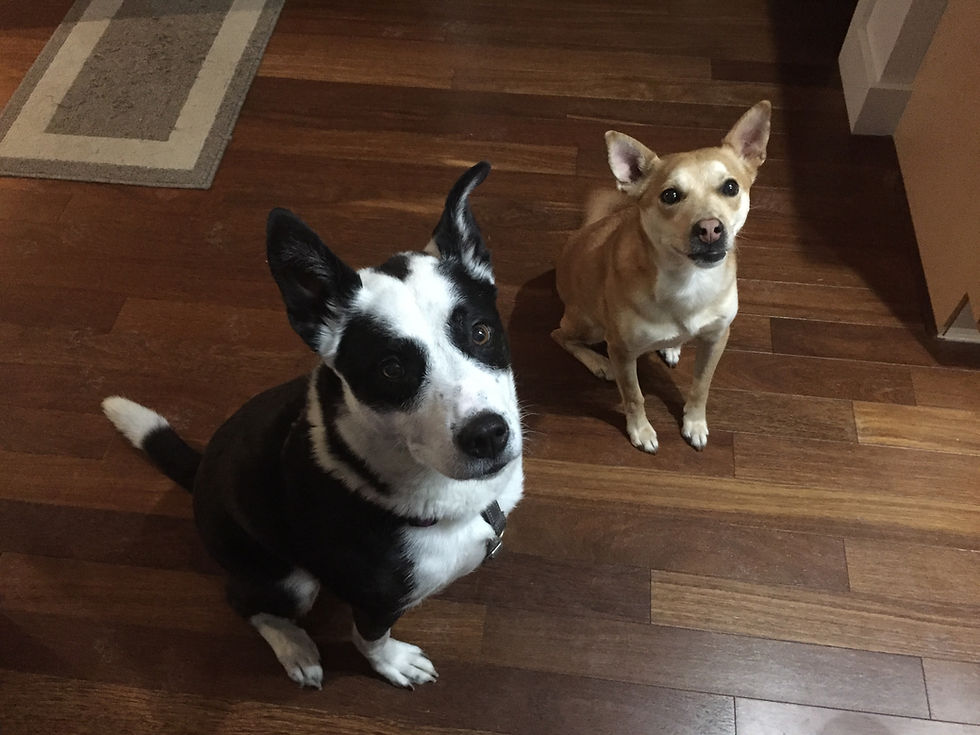
If you're trying to decide between a board and train program or private lessons, you're asking a question I hear and often see come up in online dog forums.
Here's my honest take: private lessons tend to produce more sustainable long-term results. Not because a competent skilled trainer can't make observable progress with your dog by themselves, but because how much of a role you play in the process matters more than most people expect.
What's the Difference Between Board and Train or Private Lessons?
Although a board and train is technically a form of private training, many use the term "private lessons" to mean one-on-one coaching sessions that involve both dog and owner working together throughout. That's how I'm using the term here.
In a board and train program, your dog stays with a trainer (either their home or kennel facility) for a fixed period of time, typically anywhere from two to six weeks. The trainer spends time with them directly each day without you present. In private lessons, you and your dog learn together with a trainer coaching you both throughout regularly scheduled one to two hour sessions over a set amount of weeks or months.
What I've Seen in Practice
Over the years we've worked with a number of dogs who completed board and train programs before coming to us. In most of those cases, owners weren't calling because they had concerns about the effectiveness of their previous training experience. They were calling because challenges had resurfaced, or new ones had appeared, and they often had no idea it could be connected to what did or did not happen with the board and train.
One recent situation that comes to mind involved a four-month-old puppy whose first-time owners enrolled him in a board and train because he was chewing their belongings and mouthing them. They had no context for what normal puppy behaviour looks like, and they were looking for help.
Several months after that program ended, they contacted me because of significant leash reactivity and a bite incident with a houseguest. Can I say with certainty that the board and train he experienced caused those issues? No. Behaviour can be complex and there are usually multiple factors involved. What I can say is that the effects and what the dog has actually learned aren't always immediately visible. A dog may appear quieter or more "compliant" in the short term when they return home for reasons that only become clearer weeks or months later.
Why Private Lessons Are More Likely to Stick Long-Term
Behaviour challenges are rarely just about whether a dog is able to sit when asked or come when called. In my experience, they almost always involve some combination of communication breakdowns, unmet needs, stress, fear, or mismatched expectations.
Most people seriously considering a board and train are stressed out and looking for the fastest way to get some relief. That's completely valid. But there's something that often gets overlooked. No training service out there is going to meaningfully improve your dog's behaviour, their quality of life, and your life together if everything else stays exactly the same. Some things are going to have to shift on your end too, regardless of which training model you choose.
Think about what will be easier on you? Figuring this out gradually as you go under the regular guidance of your coach, or being told a number of skills to learn and changes to make all at once when your dog returns to you? Habits take time to build, and private lessons give you the space to try things, see what works, and adjust as you go.
Board and train programs exist because trainers know that if you take a dog out of the environment where the issues are happening and spend a lot of consecutive hours working with them, you can produce behavioural change. Most also know that the handoff is a challenge, which is why transfer sessions exist. But a transfer session at the end of a four-week program where your dog hasn't been living with you isn't going to produce the same outcome as having learned alongside them in your daily life from the start. Dogs are extremely contextual learners, and what they practice with a trainer, in a trainer's environment, with a trainer's much more refined skillset, doesn't automatically carry over to you, your home, and your real life situations.
When you learn in real time alongside your dog you're not just being shown what they learned. You're developing a feel for them. You're practicing in your actual real life surroundings, making mistakes in a supported setting, and asking questions as they come up. You're learning to read your dog's body language, notice early signs of stress, and respond in the situations you actually face together. Those are the skills that make daily life genuinely easier and more harmonious, and they're very hard to develop when you aren't part of the learning process.
A Word on Transparency and Methods
Because you aren't present during a board and train, you have limited visibility into how results are being achieved. Some programs are genuinely welfare-focused and offer regular updates, video, and meaningful owner involvement throughout. Others are not, and it's worth knowing the difference before you commit.
Some programs are able to advertise dramatic results in a short period of time because they rely on methods that use intimidation or physical discomfort to suppress (i.e., shut down or stop) behaviour. Research has consistently shown that aversive training methods are associated with increased stress, fear, and pessimistic emotional states in dogs. Both the American Veterinary Society of Animal Behavior and the American College of Veterinary Behaviorists recommend reward-based training as the gold standard approach and caution against the use of aversive methods.
Suppressing a problematic behaviour is not the same as resolving it. If a dog is growling at unfamiliar people, using tools or techniques that scare or cause them pain to stop the growling doesn't make them feel safer around strangers. It removes the warning sign that helps us intervene to prevent a potential injury, which actually makes them a greater safety and liability risk. That distinction matters, and it's something many owners don't realize until much later.
If you are considering a board and train, I'd encourage you to ask the trainer about what training techniques they use (ask for specific descriptions), what the transition back home looks like, and whether you can observe live or unedited videos of their sessions and receive frequent communication from them along the way.
Check out this short video on Transparency in Dog Training to learn more including specific things to look for and questions to ask when trying to choose a trainer.
Can a Board and Train Be the Right Choice?
Yes, in some situations. Concentrated time with a skilled, transparent, and humane trainer can be genuinely valuable for things like assessing behaviour, beginning modification work, or doing the foundation work to expand a dog's behavioural repertoire. The key is that teaching your dog is only half the job. The other half is making sure you understand how to maintain and build on that progress once your dog is home with you.
The Question Worth Asking
When people ask whether they should choose a board and train or private lessons, the answer really comes down to one thing. Which option is designed to teach both of you, not just your dog. Most people are looking for someone to fix their dog's behaviour quickly, because life is busy enough already. But the approach that's actually going to be most effective is one that invests as much in coaching you as it does in coaching your dog.
The question worth asking isn't 'will this option teach my dog?' It's 'does this program teach us both?'
If lasting improvement depends on your ability to understand and respond to your dog in everyday life, and in my experience it does, then you need to be learning right alongside them. That's why, in almost all cases, I recommend choosing a program that keeps you involved from the get go.
Supporting Research
American Veterinary Society of Animal Behavior. Humane Dog Training Position Statement.
American College of Veterinary Behaviorists. Position Statement on Humane Dog Training.
Ziv, G. (2017). The effects of using aversive training methods in dogs: A review. Journal of Veterinary Behavior, 19, 50-60.
Vieira de Castro, A. C., Barrett, J., de Sousa, L., & Olsson, I. A. S. (2019). Carrots versus sticks: The relationship between training methods and dog-owner attachment. Applied Animal Behaviour Science, 219, 104831.
About the Author
Jodi Beedell is a Certified Professional Dog Trainer (CPDT-KA) through the Certification Council for Professional Dog Trainers and holds a Certificate in Training and Counseling through The Academy for Dog Trainers. She owns Raising Fido Dog Training & Behaviour Consultants in Calgary, Alberta, and specializes in reward-based training and force-free behaviour development and modification techniques.


Comments